

10 Tips And Tricks For Making The Best Cold Brew At Home
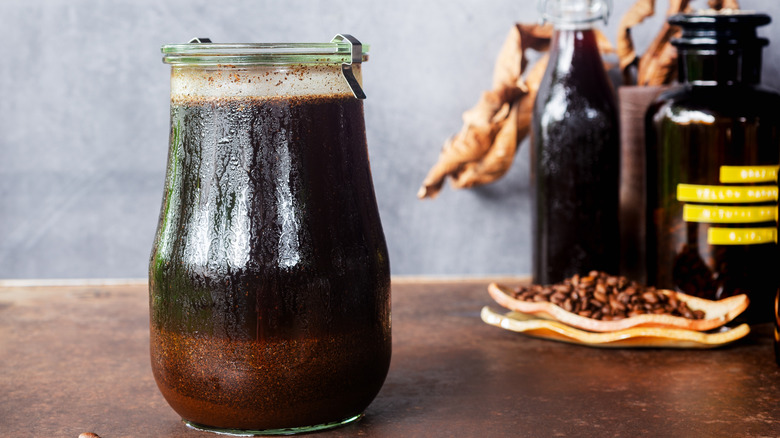
Those of us who like a good, strong coffee profile with mild acidity are likely to love a cold brew. Its preparation method is relatively simple: Mix coarsely-ground coffee with water, allow to steep in the fridge, sugar or cream to taste, and serve. Sounds straightforward right? And, it is, but this doesn't mean that a few tricks up your sleeve won't help perfect your technique.
First, let's clear up a quick point. The adjective "cold" here refers to the fact that the drink is steeped in cold water. You can actually serve cold brew coffee warm, although most fans prefer it chilled. So make no mistake, preparing a cold brew is very different from a regular iced coffee.
Here, we'll walk you through the process of creating the best cold brew at home with tips directly from the experts. The good news is that you don't need much equipment and it only takes a few simple tricks to turn your drink from meh to barista level. Here's what Robert Peck, CEO and co-founder of Commonwealth Joe Coffee Roasters, and Kelsey Bush, chef and owner of Bloomsday and Loretta's in Philadelphia, had to share.
1. Be precise with measurements
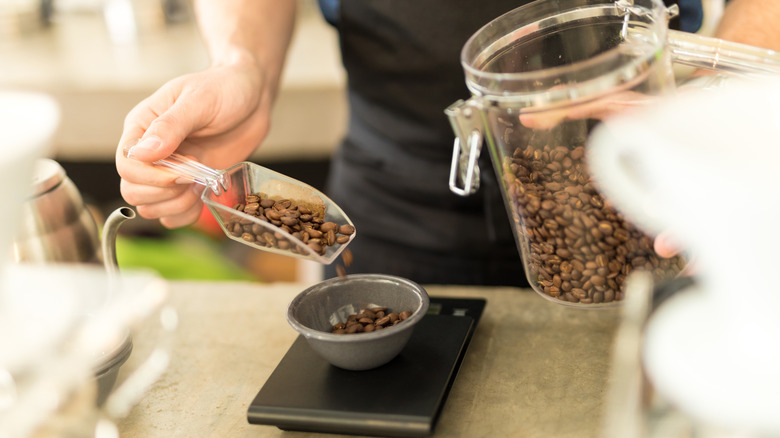
We've all been there. Some days we manage to concoct the best cold brew ever and other days it ends up tasting like slop. This is not the universe randomly picking on your home brew skills. Robert Peck puts down inconsistent results to one thing: It's probably because you're treating your coffee like a vibe, rather than a recipe. If you're approaching your cold brew mix as anything other than a very precise formula, you're already losing.
In other words, don't simply scoop some coffee in, add water, throw it in the fridge, and hope for the best. Peck's advice is to invest in a $15 kitchen scale and weigh both coffee and water before you start, taking a note of your ratio and measurements. Then, set a timer so you know how long the process takes. When you hit the perfect cold brew, you'll know exactly how to replicate it the following time. "Note the grind setting you used. Document the time the immersion started and the time you stopped it. Now you have something to react to," he says. "If batch one is a little weak, you adjust one variable and you know what changed. That is the entire game."
2. Use the right water ratio for your preferred brew
The ideal water ratio very much depends on your taste and, if you're in the mood to experiment, Robert Peck has a few tips to offer. "More coffee in the steep means more body, more sweetness," he says. "Less coffee means a thinner, more tea-like cup." In other words, changing the amount of coffee while keeping the water steady will directly affect how rich or light the final brew tastes.
The best cold brew means different things to different people, and the advantage of preparing it at home is that you can literally tailor it to your tastes. A bit of trial and error will take you to your sweet spot. "Pick your ratio based on how you actually drink it, not what a recipe online tells you," Peck says.
He suggests using 100 grams of coarsely ground coffee to 1 liter of cold, filtered water. Drink it as-is for a stronger brew, or cut it with water until you reach your preferred strength. For a concentrate that will be about twice as strong as a standard cup, a ratio of 1:5 works well. Add water or milk until you get it to your liking.
3. Start with a medium roasted Latin American beans
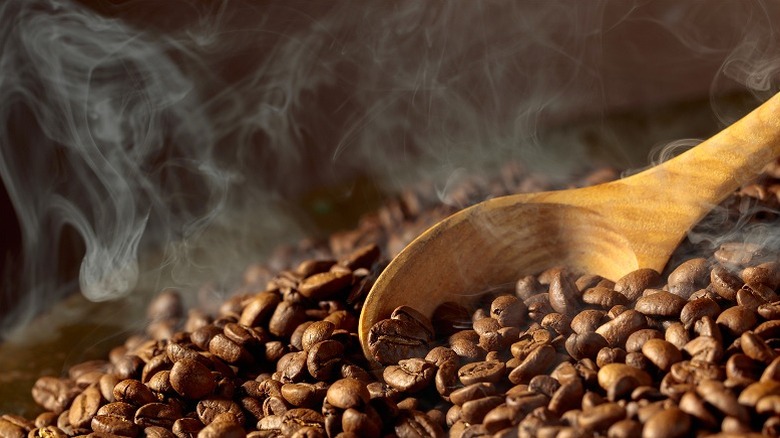
If you're still new to home brewing, choosing the correct roast can be confusing. Should you go for a light or a dark roast, and what difference does it make anyway? Many professional coffee-makers use a dark roast for cold brew, mostly because it's cheaper and works well with milk and cream. This is why, if you're ordering your cold brew from somewhere like Starbucks or Costa, you're most likely getting a dark roast.
Of course, at home you can afford to play around a bit more. Kelsey Bush likes to use a dark roast for that smooth, chocolatey cup, although she adds that if you're after a brighter and more acidic profile, a lighter roast works best. However, personal preferences and expertise play a role here, too. Robert Peck suggests starting with a medium or medium-dark Latin American roast for your first few batches as this may offer an easier path to perfecting your technique. "Once you have the process dialed in, then start experimenting with lighter, brighter coffees to see what they do."
It also pays to experiment with the origins of your roast, since the world's best coffee comes from distinct growing regions that yield very different flavor profiles. Indonesia, for example, is known for excellent dark roasts, with beans roasted at a higher temperature for a smoky, earthy flavor.
4. Use high-quality beans
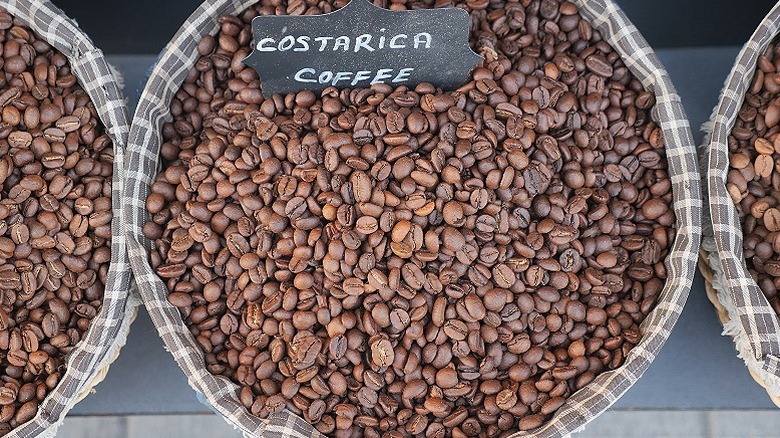
Kelsey Bush pulls no punches around this one: Invest in quality beans. Robert Peck only uses beans that score 80 or above with no primary defects. "The product can only be as good as the ingredients you put into it," he says. If you're looking for a basic guide to the world of coffee beans, here's what you need to know: Coffee beans are scored on a scale of 100, with 80 and up considered specialty grade, so if your beans hit this mark, you're good to go.
Happily, there's a workaround for those of us who don't feel like doing too much homework about the origins or quality of our beans. Simply make sure you purchase your beans from reputable roasters. Look for labels like "certified organic," "fair trade," or even industry awards, as these are all indicators of good quality.
Does the freshness of your beans matter? In an ideal world, yes. Does this mean you'll need to scrap anything that's been sitting around for a while? Not quite. One advantage to the cold brew, Peck explains, is that it's more forgiving when it comes to freshness than other brewing methods, like pour over. When preparing a pour over, the time spent between grinding and starting the brewing process can make or break your coffee. For large batches of cold brew you can wait a little longer between grind and brew without sacrificing the flavor. "Still buy fresh, but do not stress if your beans sit ground for a few hours before they go in the jar," he reassures us.
5. Opt for a coarse grind
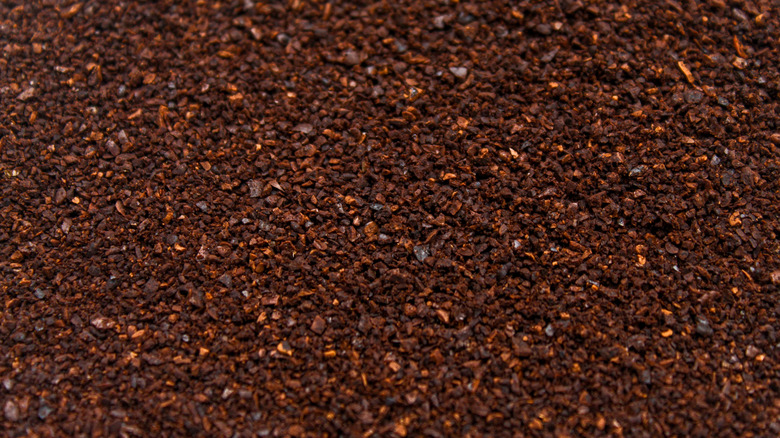
Grind size is another topic that often results in confusion among those who haven't quite yet reached expert home-brewing level. Kelsey Bush says that, for the best cold brew results at home, you'll need to make sure that your beans are coarsely ground. This is because with a cold brew, the grounds are in contact with the water for a long time. If the coffee particles are too fine, they will absorb the water faster, resulting in over-extraction, sludginess, and a bitter taste.
So, how coarse are we talking here? Robert Peck says the grind should be a little coarser than you would grind your coffee for a French press. That's a bit chunkier than a medium grind. "Think coarse kosher salt, or raw sugar crystals," he says. With the coffee sitting in cold water for a full day, you really don't want too much surface area exposed to water for way too long. Or, as Peck puts it summarily: "Coarse grind, less surface area, slower extraction, cleaner result."
6. Use a burr grinder for best results
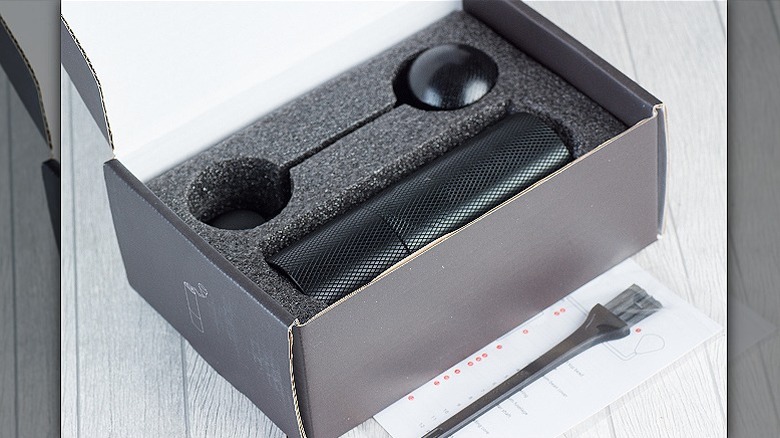
The next question in our quest for the best cold brew at home is kind of obvious: What's the best way to get that coarse grind? Robert Peck prefers using a burr, rather than a blade grinder. This is because burr grinders crush beans to a uniform size, which results in an ideal even extraction. "Blade grinders, on the other hand, chop the bean into a random mix of dust and chunks," he elaborates. A dusty grind means that our cold brew is over-extracted and bitter, while the chunks give us an under-extracted and sour flavor in the same jar. "The result is muddy and unpleasant tasting," Peck says.
If you do not own a burr grinder, Peck's easiest fix is to buy your beans pre-ground at the coarse setting. For those of you who worry this may affect the freshness of your grind, you can set your mind at rest. Some baristas actually suggest grinding your coffee beans in advance for a variety of reasons, the most important of which is that each cup will be consistent in taste and strength. Store the ground beans in an airtight container so they stay fresher for longer.
7. Steep for at least 12 hours
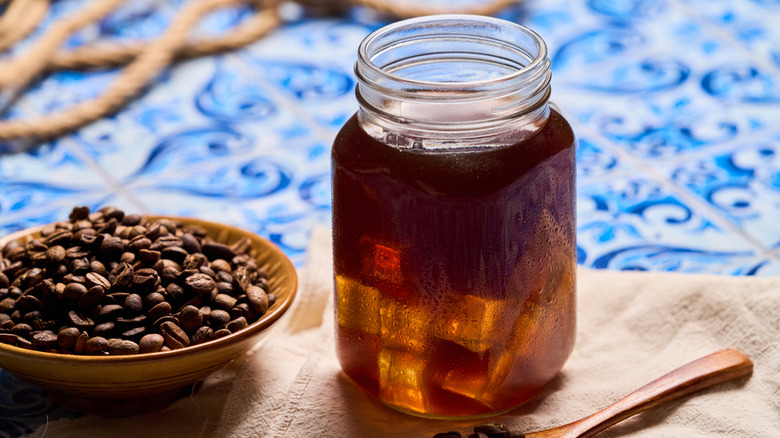
These may be fighting words for some, but the process of acing the best cold brew at home is not totally unlike the process of scoring an excellent cup of tea. Both involve the process of steeping, which involves immersing the coffee in water. Not steeping for long enough is one of the most common mistakes you should avoid when crafting your own cold brew. How long should you aim for? For Kelsey Bush, the perfect time can be as little as 15 hours and as much as 24 hours. "The longer you steep, the more robust the flavor will be," she says. But, be wary, as once you go over the 24-hour mark your brew will start tasting bitter.
Robert Peck recommends a minimum of 12 to 14 hours, with the sweet spot for him landing between 16 and 18 hours. He also cautions against steeping for longer than 24 hours. "Past that point, you start pulling out the solubles you do not want," he says. "The cup loses its smoothness." Why 16 to 18 hours? Peck explains that this timeframe is when you get that full body, deep chocolate profile.
8. Seal your cold brew before storing
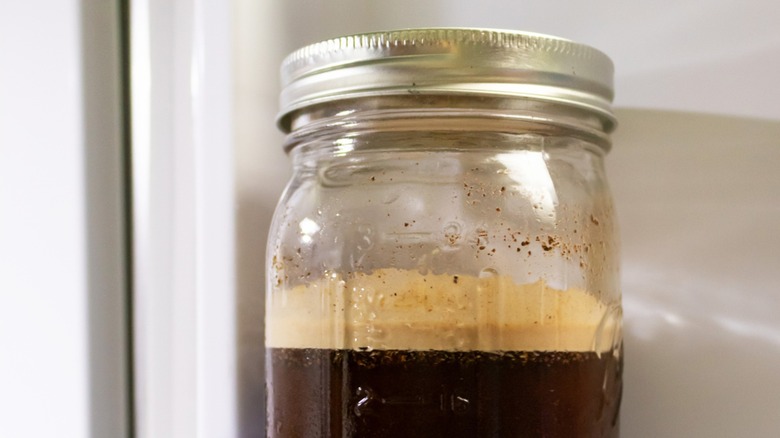
So your home cold brew is all set and ready to store. The way it's stored makes a huge difference to the final flavor, and Kelsey Bush is emphatic about this. For starters, make sure the container is large enough so that the ground coffee gets plenty of contact with the filtered water. Secondly, "make sure your brew is kept in an airtight container in the fridge," she says.
Even when stored perfectly, a homemade cold brew has a limited lifespan. While a commercial cold brew can have a shelf life that lasts up to 120 days, don't expect your home brew to stay drinkable for so long. Robert Peck explains why the coffee at Commonwealth Joe Coffee Roasters lasts longer: "We brew without exposure to oxygen and store it in kegs that have been purged with nitrogen."
He calls this the gold standard, but adds that it's hard to replicate at home. Typically, cold brew that's kept sealed in a glass jar in the fridge will hold up for about one to two weeks. Its shelf life starts diminishing as soon as you dilute it with water or milk. "Drink the diluted batch within two to three days," Peck says.
9. Add sweetness and flavor after brewing
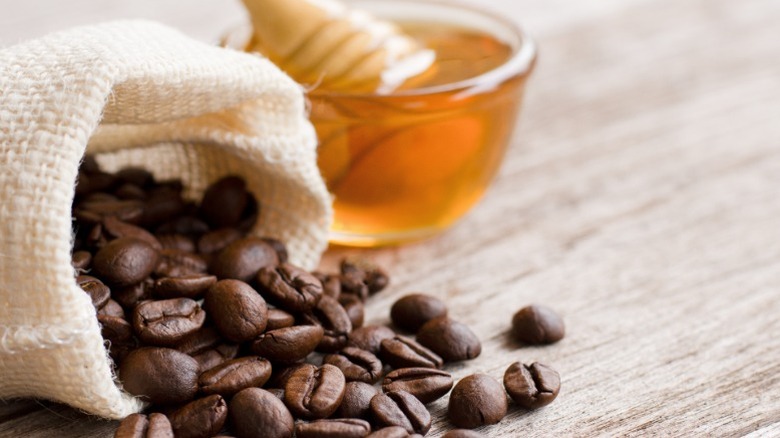
One of the reasons a cold brew is so popular with committed coffee lovers is the fact that the flavor profile tends to be stronger than other coffee. That said, some may prefer to soften the taste by adding layers of flavor. If you're doing this, you'll need to follow a specific process to make sure the coffee itself isn't compromised. "Once you have a clean cold brew base, you can build on top of it with vanilla syrup, maple syrup, honey, brown sugar syrup, or a tiny pinch of salt," Robert Peck says. "That gives you much more control and keeps you from ruining a whole batch."
For some added sweetness, Peck suggests looking up a custom cold foam recipe, or even a natural syrup. He also likes the way a cold brew can be used to create cocktails. "Bourbon, coffee liqueur, or even a simple espresso martini-style drink can all work nicely because cold brew has body and lower perceived acidity," he suggests.
10. Use good-quality water
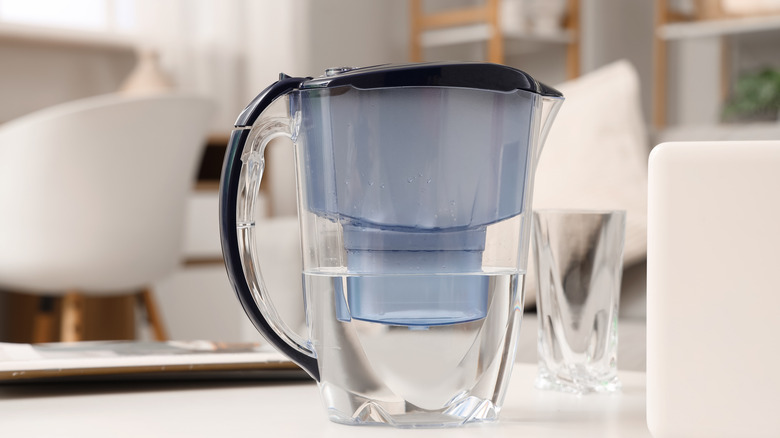
It may, or may not, surprise you to learn that the most important tip to make the best cold brew coffee at home is related to a very mundane ingredient: Water. Kelsey Bush recommends investing in a water filter to achieve the desired quality. "Even a portable one will make a huge difference in your cold brew," she says.
Likewise, Robert Peck pulls no punches, warning that if the water is bad, you can expect a bad cold brew. "There is no roast level, technique, or trick that gets around this," he insists. "You could be using the best coffee in the world, and bad water will still ruin the cup." Peck adds that distilled water should be avoided, as should reverse osmosis water without remineralization. If you're not sure about the quality of your water, he offers a very sensible way to help you decide. Just pour yourself a glass of the water you intend to use in your cold brew and drink it. "If you would not happily drink it straight, it is not going to be good in the coffee," he says.