

7 Essential Tips For Storing Cast-Iron Cookware
We may receive a commission on purchases made from links.
Cast-iron cookware may not be as popular today as it once was, but you'd be hard-pressed to find a chef or baker who didn't have at least one of these items in their kitchen. Why? There are a slew of benefits to using cast-iron over alternatives like stainless steel or ceramics, such as greater durability, heat retention, and even cooking. Plus, these pieces can be quite versatile and even add a small amount of dietary iron to the foods you cook in them. But, these amazing cookware pieces require special care techniques to continue working properly — and these unique considerations even extend to how you store your cast-iron.
Coming from a Southern family that valued traditional cooking, learning how to use, clean, and store cast-iron cookware was mandatory in my household. Over the last three decades or so of cooking at home, I've continued to use those valuable skills to make some of my family's favorite dishes, like skillet cornbread and chicken-fried steak. During my professional cooking career, I also regularly made use of cast-iron cookware, providing me with even more expertise on the topic. Today, I'm going to impart some of that hard-earned wisdom with you, so you can skip some of the mistakes I've made in the past. If you want to keep your items free of rust and other damage, you need to know these essential tips for storing cast-iron cookware.
1. Proper cooking and cleaning techniques make a big difference
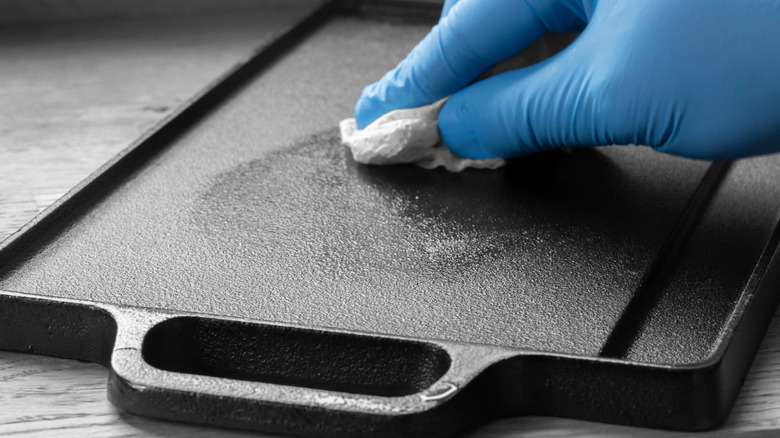
This may not sound like it has a lot to do with storage, but proper cooking and cleaning techniques make a big difference. If you're not cooking in and cleaning your cast-iron cookware properly, then they may end up rusting and scratching, no matter how you store them. Every step in the cast-iron care cycle is intimately entwined, and following through properly can preserve heirloom cookware that lasts generations. Fail on any step in that care cycle, and you could have a big problem on your hands.
To properly clean your cast-iron skillet, Dutch oven, or griddle, you'll want to either use a salt scrub or hot water with a gentle sponge. Make sure your skillet is fully dry before re-seasoning it as necessary and carefully putting it away. Oh, and there are some foods you'll want to keep away from your cast-iron cookware, too — prime examples include tomatoes, flaky fish, and foods with a strong scent. If you want to learn more about this pre-storage topic, check out these essential tips for cooking with a cast-iron skillet, or dive into our ultimate guide to cast-iron cookware.
2. Make sure your cast-iron cookware is completely dry
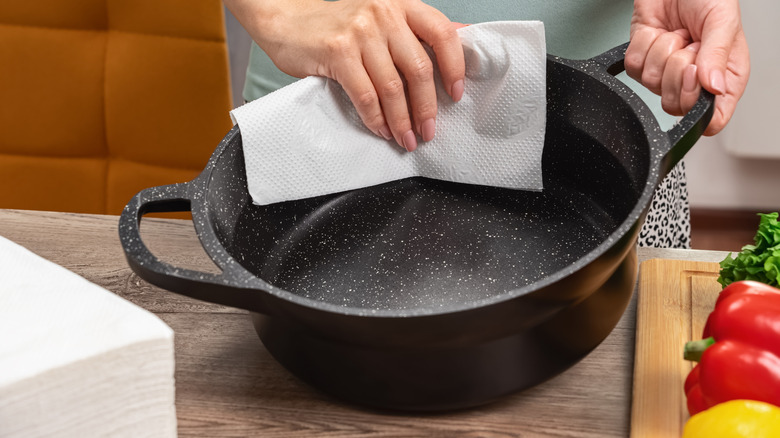
Moisture is your cast-iron cookware's worst enemy, and it comes in many forms. The most obvious form is the water used to clean your pots and pans. If you've taken the water-and-soft-sponge route to cleaning your cast-iron cookware, be sure to dry it completely before storage. There are two options for doing this. My preferred option is to set the cookware on the stovetop and heat just long enough for all the water to evaporate. Once the skillet or pan cools, it's safe to put it away. Another option is to gently pat the cookware dry using a clean paper towel, and then leave it out to finish air-drying for a few hours.
Water may be the most obvious culprit when it comes to moisture, but it's far from the only one. Other forms might include humidity, steam, or condensation. Be sure to avoid these while your cookware is drying, and avoid storage areas that may be prone to these.
3. Add a moisture barrier before storing
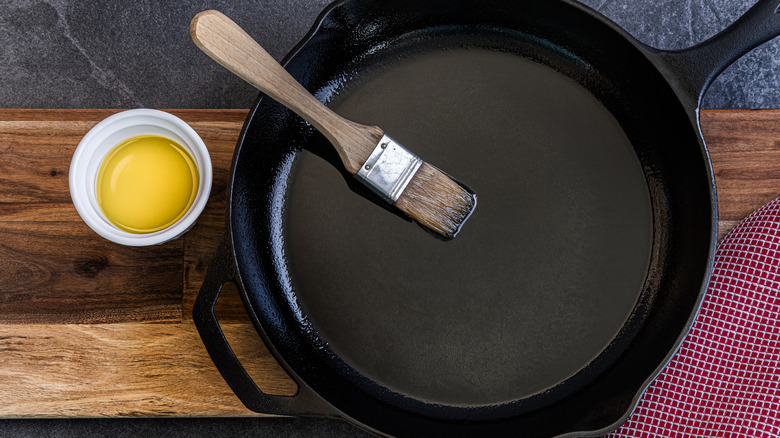
You'll hear avid cast-iron users regularly talking about a "moisture barrier." This is really just a thin layer of food-grade oil that you rub over the entire surface area of your cookware to help protect the cast-iron beneath from moisture — as you can see, much of how you care for your pan has to do with moisture protection.
To properly add a moisture barrier before storing, start with a completely dry pan. Then, take a paper towel or a clean, thin rag and use it to rub oil over the whole surface of your cookware. This includes the handle, bottom, and outer sides. The best oils to use are neutral (meaning they don't add any taste) with a high smoke point. I personally use vegetable oil, but canola oil, soybean oil, and corn oil are also excellent options.
But why is preventing moisture so important in the first place? It's because cast-iron is prone to rust, which is something you don't want getting into your food. Basically, cast-iron is prone to oxidation, which is the process that creates rust. Other types of metal cookware (like aluminum or stainless steel) aren't as prone to this process because they have protective layers built into them during the manufacturing process.
4. Consider hanging cast-iron skillets on wall hooks or pot racks
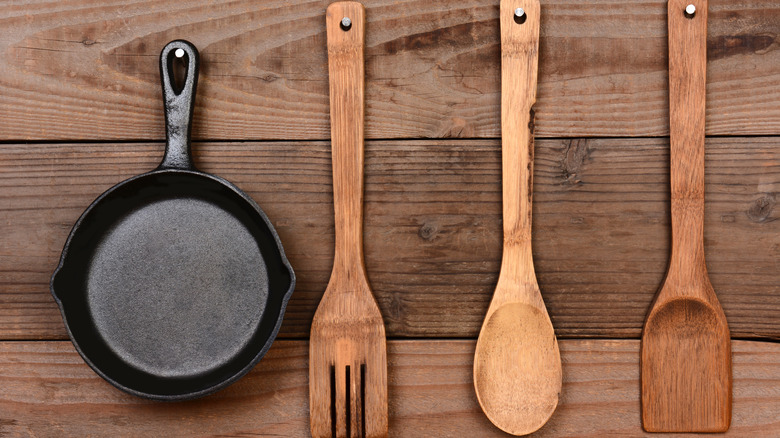
The best way to store your cast-iron skillets, pots, and pans is to hang them up on wall hooks or pot racks. That being said, I don't suggest hanging larger cast-iron griddles or Dutch ovens, as I find these have a tendency to be too heavy. Besides being an excellent way to organize your cookware in an easy-to-reach, easily-viewable space, hanging promotes airflow and therefore reduces the risk of scratching or rusting.
Before you hang your cast-iron cookware on a wall without forethought, understand that there are a few considerations to make because of how heavy these can be. Avoid weak or flimsy hooks because they'll likely break, and make sure you anchor them properly in your wall, or else the weight of your cookware may cause the hooks to come free. A big crash to the floor is an easy way to damage these pieces.
If you aren't sold on the idea of hooks anchored into the wall, a pot rack is an excellent option. I recommend this VyGrow Wall Mounted Heavy Duty Steel Pot and Pan Hanger. Not only does it provide space for hanging your cast-iron cookware, but it has a shelf and special storage for up to two lids. It's also aesthetically pleasing and comes in a few different shades, so you can pick the one that best matches your kitchen.
5. Be careful if storing your cast-iron cookware in cabinets

We briefly mentioned it earlier, but it bears mentioning here in more detail — moisture can come from things like humidity, steam, or condensation. And, you need to consider this when determining which cabinet you'll place your cast-iron cookware in. This means avoiding cabinets (or even open shelving and hooks) that are above the sink or stove. If your washing machine and dryer are located in your kitchen, avoid storing your cast-iron cookware in cabinets located above these, too.
But any cabinet can be hiding moisture in the form of humidity, regardless of where it's located. Before choosing a cabinet for cast-iron storage, take a look inside. Do you see any droplets of moisture on stored items? Or, is there a light sheen inside after you've cooked or during a particularly humid day? If the answer to either of these questions is "yes," you should skip storing cast-iron inside and also consider creating ventilation or including moisture absorbers inside your cabinets to prevent mold and mildew.
There are additional considerations when storing these unique pieces inside cabinets. For starters, you should avoid storing any cast-iron pots or pans with the lid on, since this traps moisture inside. Try storing them side-by-side instead, if possible. Also, consider using wire racks between your cookware to maximize airflow instead of stacking them directly on top of each other.
6. Use protective layers if you're going to stack your cookware
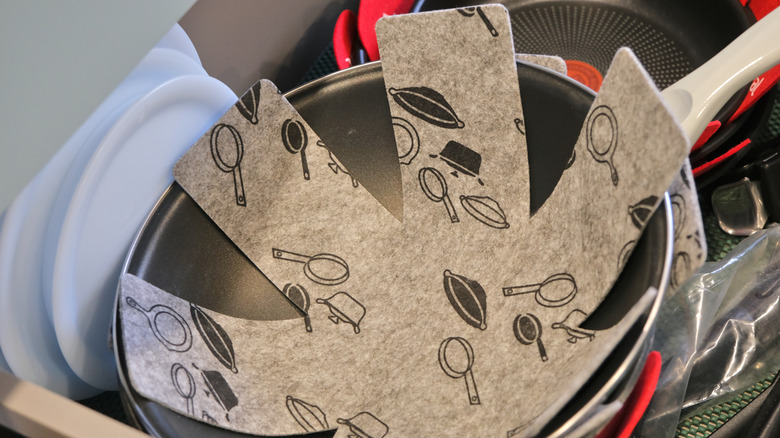
I personally don't recommend stacking cast-iron cookware if you can help it because it can promote moisture retention and also scratch the seasoning. But, I also know that this isn't always avoidable. Sometimes, you need to make the most of minimal kitchen cabinet space. And, in that regard, I even stack my two cast-iron griddles together because there just isn't room in my kitchen otherwise. If you fall into this "can't help it" category, as I do, there are a few precautions you can take to protect your cookware.
Using protective layers between your cookware can help prevent scratching the seasoning. Scratched seasoning is a big issue because it stops your cast-iron cookware from being non-stick, and, as a byproduct of that, a little more prone to rusting. Creating layers can be as simple as reaching for paper towels or even clean, thin kitchen towels. But, if you want to go the extra mile, you can grab felt pan protectors like this 12-pack of BOYAN pot and pan protectors.
Even if you're not stacking them, using protective layers isn't a bad idea. After all, scratching can happen for more reasons than just pan-on-pan contact. Items bumping into the pan or even the shelf falling from the heavy weight are both examples — the latter of which I found out the hard way. That's why I always wrap my cast-iron cookware in paper towels when they're in storage.
7. Never store food in your cast-iron cookware
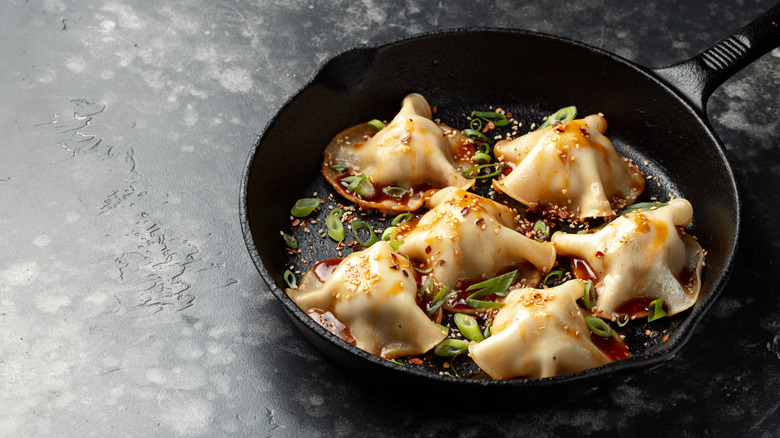
Some types of cookware allow you to transfer foods straight from the stovetop or oven to the refrigerator. Ceramic cookware is a perfect example of this, and many people enjoy this convenience. However, you absolutely can't store food in your cast-iron cookware — and you should avoid placing cast-iron in the refrigerator, too. If you do place your cast-iron pots or pans into the refrigerator, the cold, wet environment could cause them to rust.
Rust isn't the only danger here, however. The flavors of certain foods can leach into the cast-iron if left in the pan for a long time. Common culprits include overly acidic foods like tomatoes or foods with a strong smell like fish. In the case of acidic foods, they can actually slowly eat away at the seasoning of the cast-iron and the metal itself. Make sure to always transfer foods from your cast-iron cookware to plastic, glass, or ceramic storage containers instead.