There’s nothing like snipping fresh basil off a plant that’s growing on your windowsill and adding it to a simmering tomato sauce. While dried herbs have their place in many recipes, the fresh stuff has a different appeal and aroma, which elevates homemade dishes in seconds. Growing your own herbs doesn’t take much effort, and there’s one genius way to make it easier and cheaper: Planting seeds or cuttings in old food containers.
There are plenty of special plastic receptacles for propagating and growing herbs that are available to buy online, but why spend extra money on seed starters when food containers work equally as well? The only thing that sets them apart is the lack of drainage holes at the bottom. Luckily, you can pierce through the base of clean food containers, such as yogurt pots or margarine tubs, quite easily with a sharp knife or skewer (if you want a neater appearance, use a hot glue gun to melt uniform holes across the bottom). Then you can add potting soil to each container, plant your seeds, and care for them with regular watering and sunshine until shoots begin to appear. If your containers are large, you can leave the herbs in there to flourish and place them in a stronger long-term plant pot to create your own kitchen garden. Alternatively, turn them upside down gently, release the plant, and replant them in a prettier pot to showcase on your windowsill or plant them outside in raised beds or planters.
Get creative and plant unusual herbs in used food containers
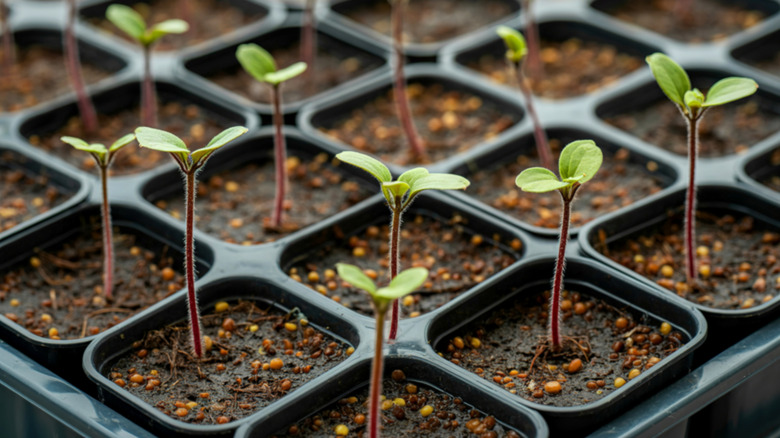
Considering what you like to cook is one of the first tips for starting your own kitchen herb garden — if you like pesto, basil is an ideal herb to start with because you can use cuttings from a grocery store to propagate your own plant (pop them in a mason jar filled with water and once roots appear you can pot them in your food containers) That said, growing your own herbs from seed means you can step outside the boundaries of what’s available at the supermarket. For instance, you could plant lesser-known herbs, such as chervil or marjoram, to add complexity, verdant color, and aroma to your homemade dishes. Better yet, repurposing containers that would otherwise end up in the trash is a small but mighty way to commit to sustainable living; you’ll reduce waste, conserve resources, and save money in one fell swoop.
Once you’ve mastered the art of growing your own herbs in food containers, you could elevate your repurposing game and turn old teacups into whimsical kitchen herb planters too. Simply add some gravel to the bottom, top with soil, and plant your seeds to make a charming addition to your kitchen.